

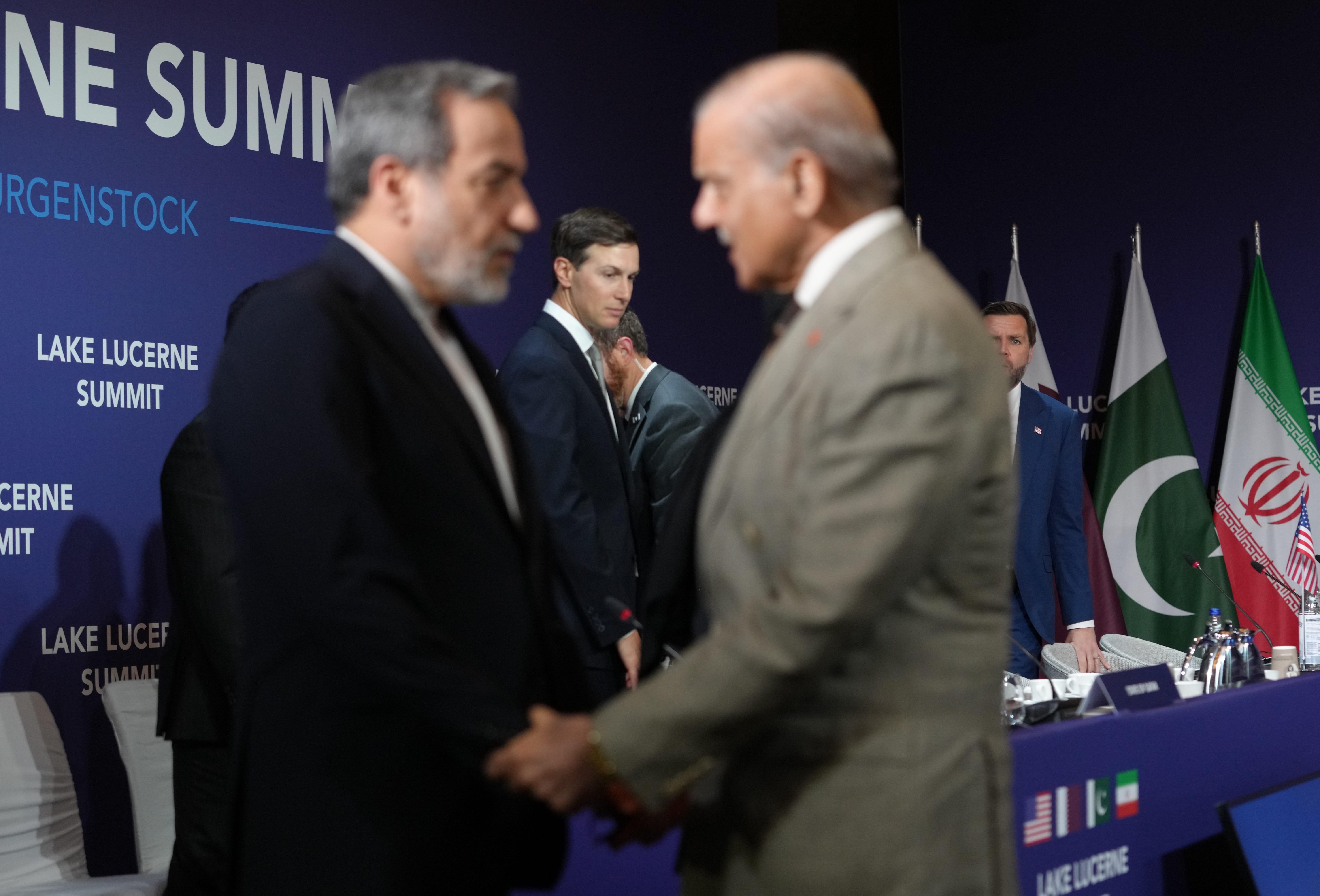
Direct talks between the US and Iran, the first since the Trump administration and Israel launched their failed regime change war in February, have ended in what Qatari and Pakistani mediators describe as “encouraging progress.” The two sides have agreed to open a “de-confliction cell” to enforce a ceasefire between Israel and Hezbollah in Lebanon, where Israel has killed more than 4,000 people and displaced over 1.5 million since March.
Seen from Washington and Tel Aviv, the enduring capability of Hezbollah to resist Israeli occupation, be it in Lebanon or in Palestine, remains a threat to a broader peace deal. As UN Ambassador Mike Waltz recently put it, the US wants to help Lebanon “rid” itself of the “cancer” that is Hezbollah.
Trump and his ally Benjamin Netanyahu hoped to advance that goal by overthrowing Hezbollah’s chief ally in Tehran. Because that failed, Trump has advocated tapping into a US-led regime change campaign that did succeed: Syria, now under the rule of the former al-Qaeda affiliate that toppled Bashar al-Assad in December 2024.
“I suggested to Israel to let Syria take care of Hezbollah, because to be honest with you, I think they do a better job,” Trump said last week. Syrian president Ahmed al-Sharaa has declined the opportunity. The new Syrian government, presiding over a war-ravaged country, is in no position to open a new conflict with Hezbollah, which intervened in the Syria dirty war on behalf of Assad’s government. Even if al-Sharaa wanted to now settle an old score, the Israeli military did not help matters by wiping out much of Syria’s military assets after it helped overthrow Assad.
While impractical, the fact that Trump can even voice such a proposal speaks to why the region has seen so much turmoil. From the Trump administration’s point of view, Hezbollah, which has a large domestic constituency and whose political wing is a part of the largest political bloc in the Lebanese parliament, is a “cancer.” By contrast, the new Syrian government, ruled by a former leader of ISIS and Al Qaeda who was long on the US terrorism list, is now a welcome ally available to do the US and Israel’s dirty work. So why is the former deemed to be a “cancer”?
A declassified 2003 State Department report (PDF below) that preceded the US-led regime change war on Syria highlighted the priorities in Washington that endure today. The Syrian government, the report acknowledged, has “provided tangible and beneficial CT [counter-terrorism] cooperation, in particular with respect to information-sharing.” Damascus also gave “high priority” to investigating threats against the US military throughout the region. Despite subsequent US claims that Syria helped terrorist groups cross over to target American forces in Iraq, Syria even “[took] measures to improve security along its border with Iraq” and was “fully cooperative” with US requests to inspect it.
Yet there was one problem.
“However,” the report complained, the Syrian government “has refused to cooperate in CT efforts against Palestinian and Lebanese groups which it considers to be engaged in legitimate resistance of illegal occupation.” Noting that Syria – like the United States – is fearful of Al Qaeda, the report added:
...Syrian officials continue to distinguish between terrorism and what it considers to be “legitimate” armed resistance undertaken by people living in occupied territories for the sake of national liberation. For this reason, Syria does not recognize Hizballah or the Palestinian rejectionist groups as terrorist organizations, and thus refuses to take actions against them consonant with the actions it has taken against other terrorist organizations/individuals.
While refusing to take military action against Palestinian and Lebanese forces, Syria meanwhile took “a lead role” in regional fora to “formulate a unified Arab/Muslim position that Palestinian and Lebanese groups fighting Israeli occupation are not terrorists.” It also used its position at the United Nations “to encourage international support for Palestinian national aspirations and denounce Israeli actions in the Palestinian territories as ‘state terrorism.’”
Even though the US acknowledged that Syria provided “tangible and beneficial cooperation” against Al Qaeda, its support for Hezbollah and Palestinian groups who seek “national liberation” was enough to mark it for regime change. The US was so devoted to that goal that it was willing to help install an Al Qaeda offshoot in Assad’s place. And that successful regime change helped turn US-Israeli sights toward Tehran. As the Washington Institute for Near East Policy, a pro-Israeli think tank, recently gloated, “the current U.S.-Israeli campaign against Iran would have been even more difficult if Assad were still in power.”
The Iranian government has deterred that campaign, and now insists that Israel cease its aggression in Lebanon as well. For the Trump administration or any future one, a broader peace deal will hinge on whether the presence of movements that support Palestinian and Lebanese liberation can be tolerated, or seen as a cancer worthy of many more regional victims.

If Hezbollah's a cancer, then what's Israel? They've continued to kill Lebanese civilians regardless of any deal made between Iran and the US – something Waltz is loath to acknowledge. Unless Trump can rein in Israel, then expect no peace, more lies and an increasing death toll. Another well written and accurate piece – depressing, but at least Starmer resigned today, so it's not all bad. Thank you, Aaron.
Israel is alien remnant contaminant - see the Murderbot Diaries by Martha Wells.